


You walk into a bakery and the smell of cinnamon rolls hits you. Suddenly you're seven years old again, standing on a stool beside your grandmother's kitchen counter, flour dusting your fingers. The memory isn't a fact you retrieved. It's a moment you re-entered.
That re-entry is what researchers call episodic memory — the system that lets you mentally travel back to a specific time and place, not just recall information about it.
The short version
Episodic memory appears to be a distinct brain system for reliving the past, not just a storage locker for facts. The evidence for specialized mechanisms is genuine but still debated. Pay attention to what triggers your own mental time travel — those cues are doing more than reminding you.
What the research actually says
For decades, the dominant model treated memory like a warehouse: information enters through the senses, moves through a short-term holding area, and gets filed away in long-term storage if rehearsed enough. Atkinson and Shiffrin's multi-store model, described in an overview of influential memory theories, laid out this three-stage flow — sensory, short-term, long-term, with rehearsal as the key that promotes items from one stage to the next. Simply Psychology's breakdown of memory stages echoes this framework, noting that encoding can be visual, acoustic, or semantic, and that retrieval depends heavily on cues.
But episodic memory doesn't behave like a filed document. When you remember your seventh birthday, you don't just access a record, you re-experience the heat of the candles, the scratch of the wool sweater, the particular shame of spilling punch. Andonovski, Sutton, and McCarroll argue this isn't an illusion. They survey recent evidence for specialized neurocognitive mechanisms, computations and representations that are distinctly mnemic, meaning they belong to memory proper, not shared with imagination or simulation. The "common system" view, which says remembering and imagining run on the same machinery, would make episodic memory disappear as a separate category. These authors push back: the machinery may overlap, but the operations aren't identical.
Think of it like a kitchen. Imagination and memory share appliances, the stove, the knives, the counter space. But memory has a specialized tool: a cast-iron pan seasoned by years of actual use. Imagination can simulate a meal. Memory serves you the leftovers, crust and all, from a dinner that really happened. The pan is the history.
The evidence here is theoretical and review-level, not a single experiment. Andonovski et al. synthesize findings across neuroscience and philosophy rather than reporting new data. That means the case for distinct mechanisms is plausible but not settled. The multi-store model from Atkinson and Shiffrin remains useful for describing stages of retention, but it wasn't built to explain the phenomenology of reliving. We're still mapping where storage ends and time travel begins.
When the time machine kicks in
You don't choose when the bakery smell hits. The cue, cinnamon, heat, yeast, bypasses intention and drops you into the past. Simply Psychology notes that long-term memories are retrieved by association, which is why returning to a familiar setting can surface intentions you'd forgotten. The system is cue-hungry, not command-driven. That's why you can't always recall a name on demand but will suddenly hear your mother's voice saying it while washing dishes three days later.
This has a practical side. If you want to remember something, a conversation, a promise, the feeling of a good decision, anchor it to a physical cue. Leave the coffee mug on the counter where you had the talk. Wear the same jacket when you need to recall the plan. The mental time machine runs on sensory hooks, not willpower. You don't wind it. You just leave breadcrumbs.
What to try this week
-
Pick one everyday cue, a smell, a song, a texture, and notice what memory it pulls forward. Write down the cue and the first three details that arrive.
-
Visit a place you haven't seen in years. Before you enter, predict what you'll remember. Afterward, note what actually surfaced and what didn't.
-
Choose a routine moment, making coffee, brushing teeth, locking the door, and pause for ten seconds to ask: what memory is nearby right now? Jot the answer even if it's "nothing."
-
At the end of each day for seven days, record the strongest involuntary memory you had and the cue that brought it. Look for patterns on day seven.
-
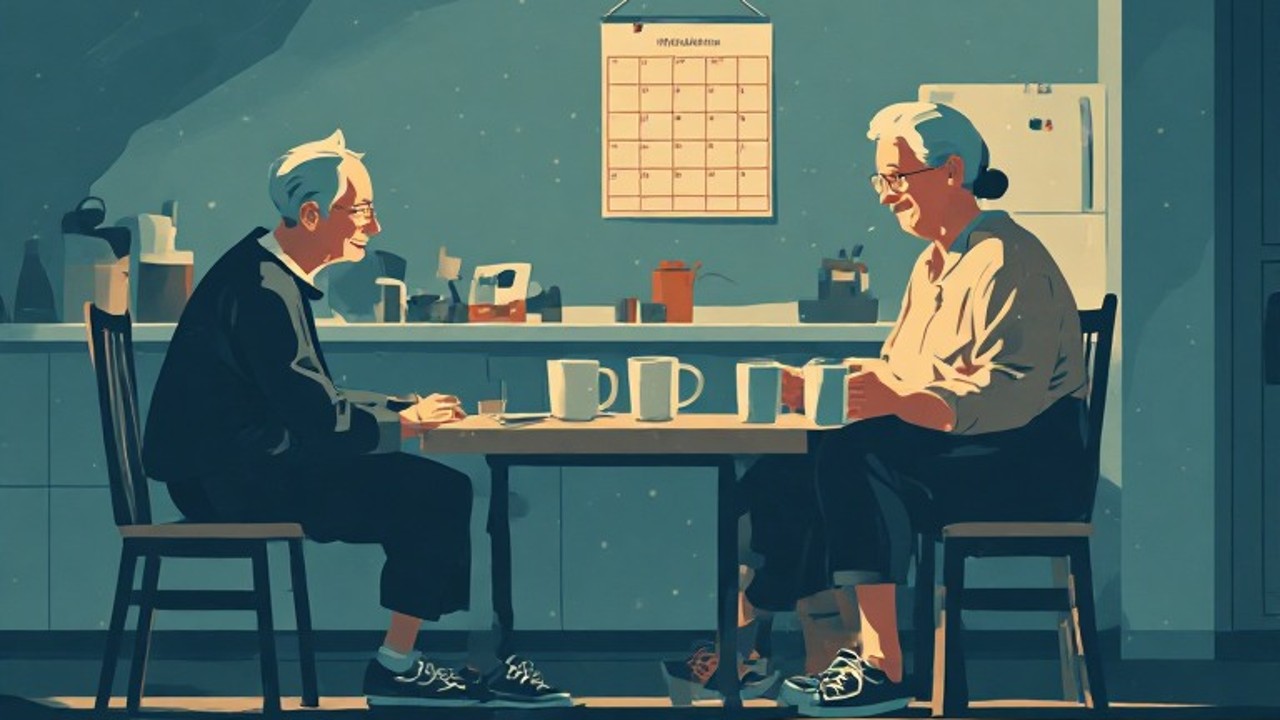
Share one cued memory with someone who was there. Compare what each of you retrieved; the gaps are as telling as the overlaps.
This won't help if you're trying to force a specific memory for a test or a legal matter, those need different tools.
Where people go wrong
Memory works like a video library. The warehouse metaphor feels intuitive: you store a clip, you play it back. But the bakery smell doesn't hand you a recording. It reconstructs the moment from distributed traces, and each reconstruction can shift the details. Simply Psychology emphasizes that retrieval depends on cues and that organization aids recall, but the process is generative, not reproductive. You're not pressing play. You're rebuilding the scene each time.
Rehearsal is the only way to keep a memory. Atkinson and Shiffrin's model, summarized in the Psychologist World overview, made rehearsal the bridge from short-term to long-term storage. Yet many of our most vivid episodic memories, the cinnamon roll moment, the spilled punch, were never rehearsed. They arrived unbidden and stayed. Distinctive, emotional, or context-rich events often consolidate without deliberate repetition. The system has more than one path to durability.
If you can't recall it on command, it's gone. Retrieval failure feels like erasure. But Simply Psychology notes that long-term memory has no known capacity limit and that cues drive access. The memory may be intact while the cue is missing. Changing the environment, the mood, or the sensory input can restore access without the memory ever having disappeared. Absence of recall is not evidence of absence of trace.
My take
The evidence for a distinct episodic system is persuasive but still theoretical, Andonovski et al. review arguments rather than report a smoking-gun experiment. What they leave out is how this plays out in daily life: we treat memory as a faithful archive, then feel betrayed when it shifts. My rule of thumb: trust the feeling of reliving as a signal that your brain is doing something specific, but treat the details as negotiable. When a memory matters, a promise made, a boundary crossed, write it down within the hour. The time machine is remarkable. It's also a remix engine. This is my reading, not a finding from the studies.
Quick questions
Can I train my mental time machine to work better?
You can't make involuntary memories appear on schedule, but you can increase the odds by enriching your cues. Simply Psychology notes that organization and context aid retrieval. A sensible first step is keeping a small notebook for sensory triggers, smells, sounds, textures, paired with the memories they bring. Over weeks you'll learn your own cue map.
Why do some memories feel more real than others?
Andonovski et al. argue that episodic memory carries a "mnemic" signature, a computational tag marking the representation as genuinely past. Memories with strong sensory and emotional detail tend to trigger this tag more reliably. The feeling of reliving isn't a guarantee of accuracy, but it does mark a different process than semantic recall or imagination.
Is it bad if my memories change over time?
Not necessarily. The reconstructive nature of episodic memory means details shift with each retrieval. Simply Psychology describes retrieval as cue-dependent and reconstructive. If the gist holds and the emotional truth remains useful, the changes may reflect the system doing its job, updating the past to serve the present.
One thing to remember
Your brain doesn't store the past; it rebuilds it on demand, and the cue is the architect.
References
- Andonovski, Sutton, McCarroll (2024). Eliminating episodic memory? Philosophical transactions of the Royal Society of London. Series B, Biological sciences
- 10 Influential Memory Theories and Studies in Psychology
- Memory Stages In Psychology: Encoding Storage & Retrieval
This article is for educational purposes and is not a substitute for professional advice.

READER CONVERSATION
Comments 0
No comments yet. Start the conversation.