

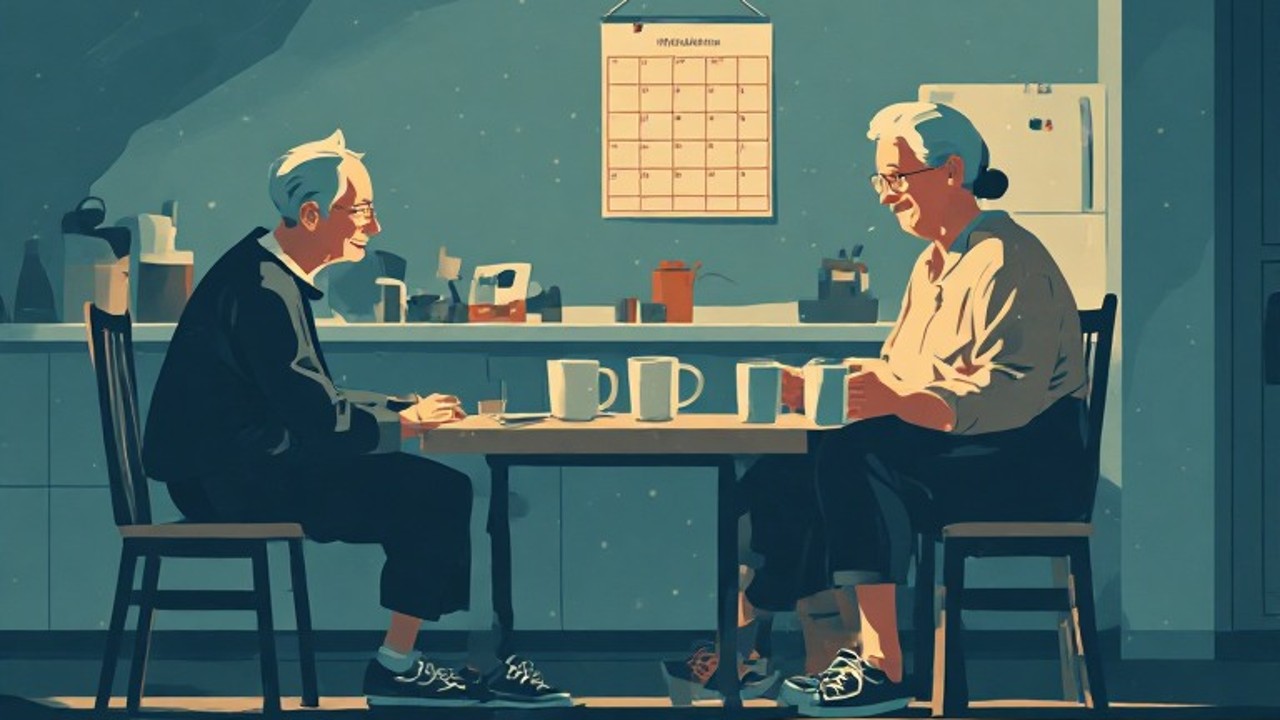
A phone alarm at the same hour. Toast at the same time. A walk that starts at the same corner each morning. In November 2026, ScienceDaily's stress news page ran a short item about that kind of sameness: University of Missouri researchers found that older adults who followed consistent daily schedules reported less physical pain, and the write-up describes a difference in how they felt "both physically and mentally."
That is a small sentence with a large idea inside it. We tend to treat routines as boring housekeeping, the stuff you do so you can get to the interesting parts of the day. The suggestion here is that the housekeeping may be one of the interesting parts.
The short version
Keeping roughly the same shape to your days looks like it helps older adults feel better, physically and emotionally, and the effect may be bigger than most of us assume. The evidence so far is a single news summary, so treat it as a promising lead rather than a settled fact. The low-risk move is to anchor a few fixed points in your week instead of redesigning your whole schedule.
What the study actually found
The brief is thin on details. It says older adults with consistent daily schedules reported less physical pain, and it frames the finding as a simple change that could affect how you feel. That's the whole of what's reported. No numbers, no list of which routines mattered, no word on how long anyone was followed.
Think of a daily routine the way you think of a familiar drive home. When the route is known, you aren't making decisions at every junction. Your attention is free for the radio, the conversation, the weather. A new route every morning isn't harder in any dramatic way. It just quietly takes more out of you, turn after turn. Predictability seems to work like that on a day: it removes small choices, and small choices add up.
Now the evidence check. This is a news item on an aggregator page, not the study itself, so we can't see the sample size, the design, or how "consistent" was measured. It also can't tell us which way the arrow points. People in less pain may find it easier to keep steady routines, rather than routines causing less pain. For a sense of how cautious this kind of advice usually is, the American Cancer Society's survivorship guideline for head and neck cancer, published in CA: A Cancer Journal for Clinicians, says plainly that most of its evidence wasn't strong enough for strong recommendations, so its guidance is consensus-based. Different topic, same lesson: sensible advice and proven advice aren't the same thing.
Why this shows up in ordinary life
Most stress advice asks you to add something. A breathing exercise, a journal, a class. Routine consistency asks you to keep something the same, which is a much smaller request and much easier to sustain. The hard part, in my experience of watching people try, is that we aim too high. We build a colour-coded timetable and abandon it by Thursday.
A review of lifestyle interventions in Parkinson's disease in The Lancet Neurology makes a related point about sticking with changes: long-term adherence is genuinely difficult, and personalised strategies and digital tools can help people keep going. Tailoring to individual needs is described there as crucial. That fits what the Missouri finding seems to nudge toward. A routine that suits your actual life beats an elegant one you can't keep.
So start with two or three fixed points. A wake time. The first meal. A walk, or a phone call, at roughly the same hour. Leave the rest of the day loose. Here's the interesting part: you don't need to believe the schedule is doing something grand. You just need enough repetition that some of the day stops asking you to decide.
What to try this week
- Pick two fixed points, not a whole timetable. Choose a wake time and one meal time and hold those steady while everything else stays loose. A schedule you can actually keep tells you more than an ideal one you abandon.
- Run a seven-day trial and jot one line a night. Note your pain level and mood on a simple 1-to-5 scale, plus whether the day went roughly as planned. At the end of the week, look for a pattern rather than a verdict.
- Hang the new habit on something you already do. Attach the fixed point to an existing cue, like the kettle, the front door, or the evening news. That way you don't need an alarm for everything.
- Nominate one flexible hour. Decide in advance which part of the day is allowed to drift, and then leave it alone. The goal is a shape, not a cage.
- Check the pain before you build anything. If pain is new, getting worse, or stopping you from doing things you used to do, speak to a doctor first. Routine is a small lever, and it isn't a substitute for care.
This won't help much if your weeks genuinely can't repeat, because shift work, caring duties or a health flare-up can turn a rigid plan into one more thing to feel guilty about.
Where people go wrong
Building the routine you'd admire rather than the one you'd keep. The review of lifestyle interventions in Parkinson's disease in The Lancet Neurology names long-term adherence as the real challenge and points to personalised strategies as a way through. So does the Missouri item, in its own way: it's about consistency, not intensity.
Assuming a routine has to cover the whole day. The ScienceDaily stress news summary describes older adults with consistent daily schedules reporting less physical pain, and it says nothing about a full timetable of colour-coded blocks. Two anchors count.
Treating the finding as proof that routine causes less pain. The write-up can't tell you which way the arrow points. People in less pain may simply find steady routines easier to keep, and the same caution runs through the American Cancer Society's survivorship guideline, which labels much of its own advice consensus-based rather than strongly evidenced.
My take
I'd resist turning this into a personality test. The headline says routine lowers stress in older adults, and the next thing you know someone is telling you that you're "a routine person" or you're not. Here's the interesting part: the source material is one short news summary with no numbers in it, so any strong claim built on top of it is doing more work than the evidence supports. What I'd actually take from it is narrower and more useful. My rule of thumb: if you can't describe tomorrow morning in a single sentence, the plan is too complicated. So my recommendation is specific. For two weeks, keep the first ninety minutes of your day identical, and change nothing else about your schedule. Same wake time, same first drink, same first task in the same order. Then ask yourself whether the rest of the day felt any steadier. That's my reading of the sources, not something they prove, and it's deliberately small enough that failing at it wouldn't mean much.
Quick questions
Does a routine have to start in the morning?
Not according to anything in these sources. The Missouri summary talks about consistent daily schedules without naming a time of day. A sensible first step is to anchor whichever part of the day is already most repeatable for you, and let the morning be messy if that's how your life runs.
What if my weeks genuinely can't repeat?
Then tailoring matters more than consistency. The Lancet Neurology review notes that long-term adherence is hard and that interventions work better when adapted to individual needs and circumstances. A practical version: fix one small thing that survives a chaotic week, such as the order you do your first three tasks.
Is it worth trying if I'm not in pain?
The ScienceDaily item also mentions feeling better mentally, not just physically. You can treat a week of fixed points as a low-cost experiment and judge it on your own notes. The uncomfortable part is that a week may not be long enough to tell you anything, so give it two.
One thing to remember
Two fixed points you keep beat ten you plan. Hold the wake time and one meal, and let the rest of the day bend.
References
- Stress News -- ScienceDaily
- Trinh, de Vries, Chan et al. (2026). The role of lifestyle interventions in symptom management and disease modification in Parkinson's disease. The Lancet. Neurology
- Cohen, LaMonte, Erb et al. (2016). American Cancer Society Head and Neck Cancer Survivorship Care Guideline. CA: a cancer journal for clinicians
This article is for educational purposes and is not a substitute for professional advice.




READER CONVERSATION
Comments 0
No comments yet. Start the conversation.